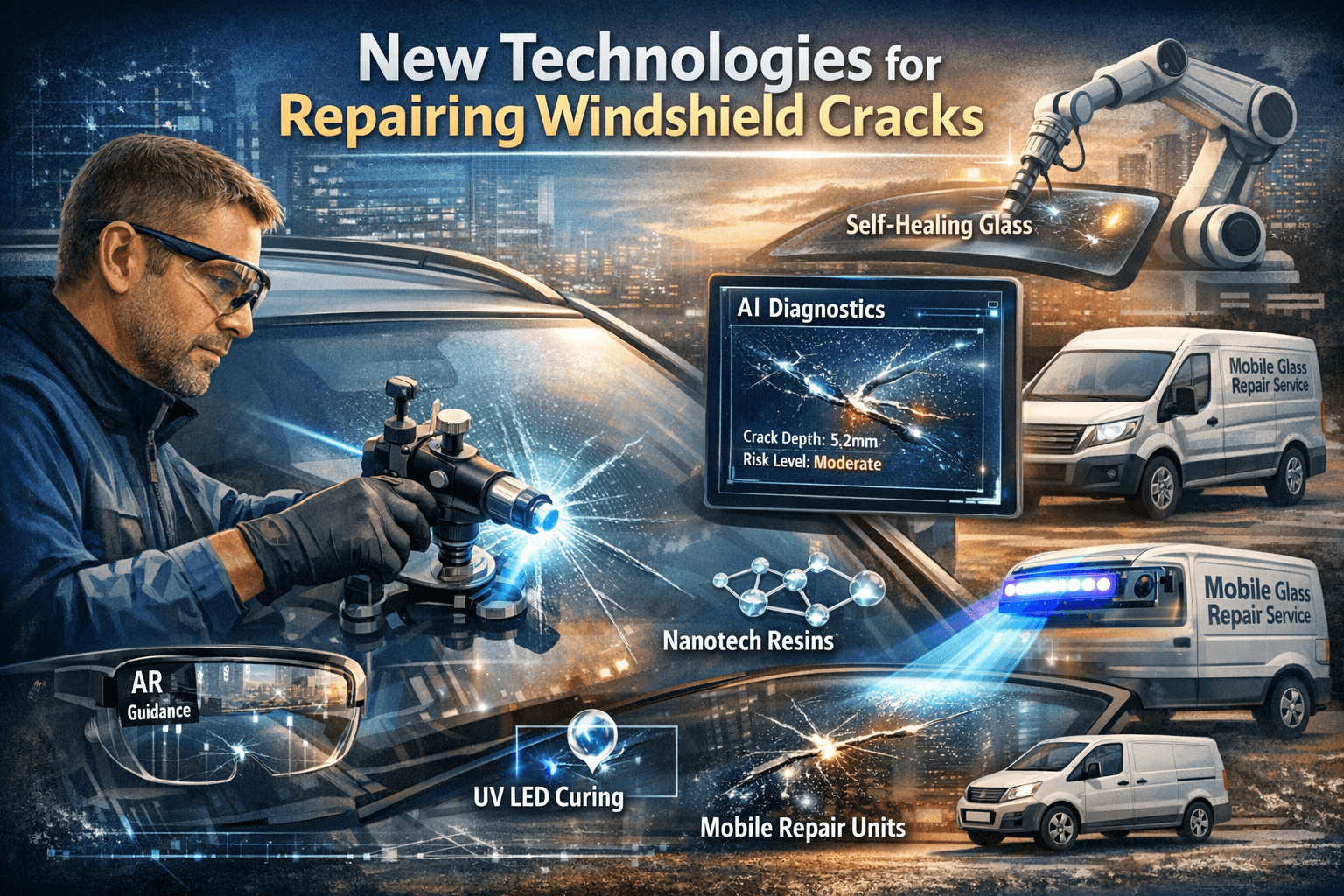
Windshield damage is one of the most common issues vehicle owners face. From small chips caused by road debris to long stress cracks resulting from temperature changes, damaged windshields can compromise both safety and visibility. In recent years, innovative technologies have significantly improved the effectiveness, speed, and durability of windshield crack repair. This article explores the latest advancements transforming the automotive glass repair industry.
The Importance of Timely Windshield Repair
Modern windshields are made of laminated safety glass consisting of two glass layers bonded with a polyvinyl butyral (PVB) interlayer. This structure prevents shattering and enhances passenger safety. However, even minor cracks can expand due to vibration, temperature fluctuations, and moisture infiltration.
Timely repair prevents further damage, reduces replacement costs, and preserves the structural integrity of the vehicle. Thanks to technological advancements, many cracks that once required full windshield replacement can now be repaired efficiently.
Advanced Resin Technologies
High-Performance Polymer Resins
One of the most significant breakthroughs in windshield repair is the development of advanced polymer resins. Modern resins are designed with improved viscosity control, allowing them to penetrate deeply into microfractures and complex crack patterns.
These resins offer:
- Enhanced optical clarity
- Stronger bonding capabilities
- Faster curing times
- Improved resistance to UV radiation
New-generation resins also feature adaptive flow technology, which automatically adjusts thickness depending on ambient temperature and crack depth.
Nanotechnology-Enhanced Resins
Nanotechnology has further revolutionized resin performance. Nanoparticles strengthen the molecular structure of the resin, increasing durability and impact resistance after curing. These nano-reinforced resins provide nearly invisible repairs and restore up to 95% of the original windshield strength.
UV LED Curing Systems
Traditional repair methods relied on sunlight or basic UV lamps to cure resin. Today, UV LED curing systems provide controlled, high-intensity ultraviolet light that dramatically reduces curing time.
Benefits of UV LED systems include:
- Consistent curing regardless of weather conditions
- Energy efficiency
- Portable and compact design
- Precision wavelength targeting for optimal resin hardening
Some advanced systems feature programmable curing cycles tailored to specific resin types and crack geometries.
Vacuum and Pressure Injection Technology
Modern repair tools use alternating vacuum and pressure cycles to remove air from cracks before injecting resin. This ensures maximum penetration and eliminates air pockets that could weaken the repair.
Automated injection bridges now include digital pressure sensors, enabling technicians to monitor real-time performance and adjust accordingly. The result is a stronger, longer-lasting bond between the resin and the glass.
Artificial Intelligence and Crack Diagnostics
Artificial intelligence is increasingly being integrated into windshield repair assessment. AI-powered diagnostic tools use high-resolution imaging to analyze crack patterns and determine whether repair or replacement is the best option.
These systems evaluate:
- Crack length and depth
- Location relative to driver’s line of sight
- Structural impact
- Risk of crack propagation
By providing data-driven recommendations, AI helps reduce human error and ensures consistent service standards.
Mobile Repair Technology
The rise of mobile repair units has been supported by portable high-tech equipment. Compact UV curing devices, wireless diagnostic scanners, and battery-powered injection systems allow technicians to perform professional-grade repairs on-site.
Mobile services improve convenience while maintaining the same technological standards as fixed workshops. Similar to how a certified refrigerator technician relies on specialized diagnostic tools to restore appliance performance, modern auto glass specialists use advanced digital systems to ensure precision and safety.
Self-Healing Glass Research
Researchers are currently exploring self-healing glass technologies inspired by self-repairing polymers. Experimental laminated glass incorporates microcapsules filled with transparent adhesive agents. When a crack forms, the capsules rupture and release material that fills the fracture.
Although still in development, self-healing windshields could significantly reduce maintenance costs and extend vehicle lifespan in the future.
Augmented Reality (AR) Assistance
Augmented reality is emerging as a training and operational tool. AR glasses can project repair guidelines directly onto the windshield surface, helping technicians align injection tools precisely over the damaged area.
This technology reduces training time, increases repair accuracy, and ensures consistent quality across service providers.
Environmental Sustainability in Windshield Repair
New technologies also support sustainability goals. Repairing instead of replacing windshields reduces glass waste and energy consumption. Modern resins are formulated with lower volatile organic compound (VOC) emissions, and UV LED systems consume less electricity than traditional curing lamps.
Some manufacturers are even developing recyclable resin systems that allow easier separation of materials during end-of-life vehicle processing.
Future Outlook
The future of windshield crack repair lies in automation, smart materials, and digital integration. As vehicles become more technologically advanced — incorporating sensors, cameras, and heads-up displays within windshields — repair methods must evolve accordingly.
Upcoming innovations may include:
- Robotic micro-repair systems
- Smart resins with adaptive transparency
- Integrated sensor recalibration tools
- Predictive maintenance software
With continuous advancements in materials science, artificial intelligence, and precision engineering, windshield repair is becoming faster, stronger, and more cost-effective than ever before.
Conclusion
Modern technologies have transformed windshield crack repair from a basic manual process into a sophisticated, science-driven service. Advanced resins, UV LED curing, AI diagnostics, and nanotechnology are extending the life of automotive glass while enhancing safety and efficiency.
As research continues and new innovations enter the market, drivers can expect even more reliable, environmentally friendly, and high-performance solutions for maintaining clear and structurally sound windshields.
Save Money • Save Time • Save Your Windshield